Scratching overhead at first light, heavy thumping after dark, a smell that creeps into one room and gets worse each day — most wildlife calls start with a sound or an odor rather than a sighting. What you hear narrows it down quickly. Squirrels are active in daylight, loudest at dawn and again before dusk, and they move fast and light across the ceiling joists. Raccoons are nocturnal, heavy enough that you can track them walking, and in spring you may hear the chittering of kits in the insulation above a bedroom. Rats run in wall voids and keep a tighter, more constant rhythm. Snakes make no noise at all; you find a shed skin draped over a rafter, or one in the garage, or under the house.
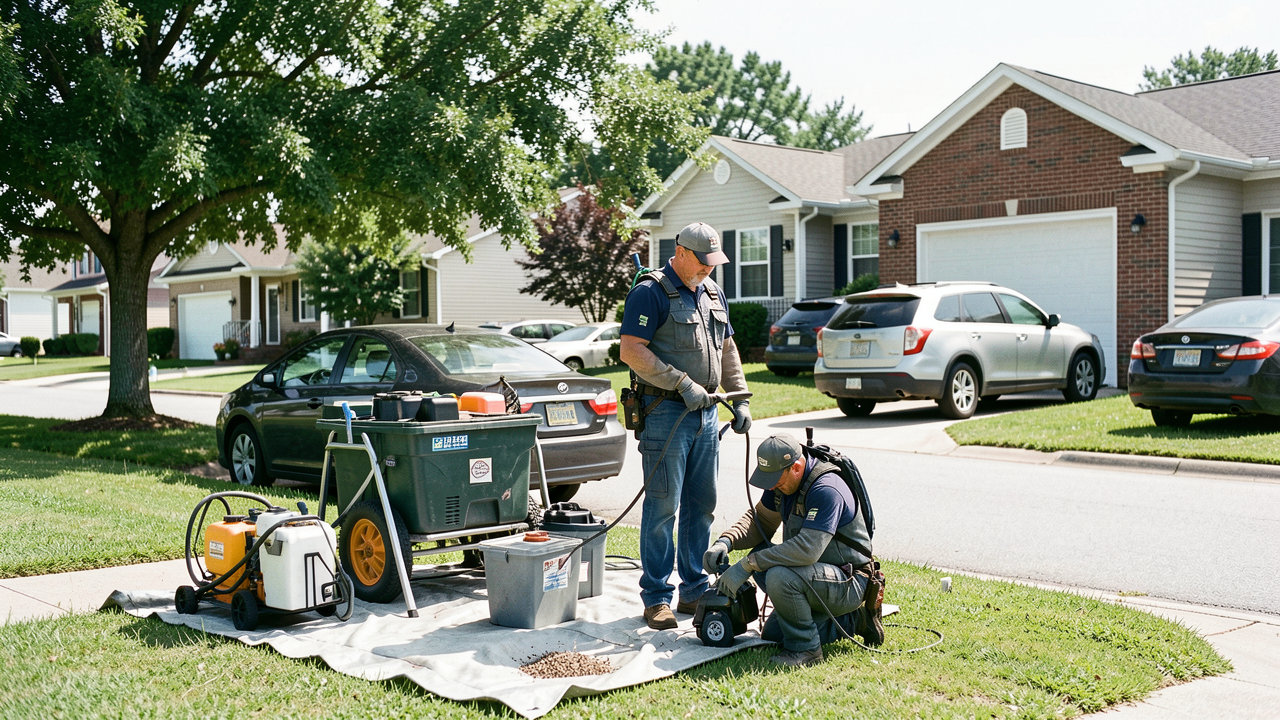
Trapping alone is not the job. Every removal starts with a full exterior inspection — the soffit returns, the gable and ridge vents, the fascia line where it meets the roof decking, the chimney chase, dryer and bath vents, and on raised and post-flood elevated houses in Slidell, the whole underside where ductwork, plumbing penetrations and open skirting give animals a sheltered run. Squirrels chew their own openings and usually leave fresh wood shavings and gnaw marks at the hole. Raccoons don't chew so much as pull: they work their hands into a soffit seam or lift a section of vent screen, which means the opening is bigger and the repair has to be stronger.
Once the entries are mapped, the usual approach for squirrel removal and attic animal removal is a one-way door on the active hole with everything else sealed, so the animal leaves on its own and can't get back. The exception is a litter. Sealing out a mother raccoon or squirrel with young still inside leaves you with dead animals in a wall cavity within days, so the babies have to be located and removed by hand first. Raccoon removal more often involves trapping, because a female with kits in a chimney or under a floor won't always use a door. Repairs need to be in metal — galvanized hardware cloth, flashing, screened vents, solid fascia replacement. Spray foam and caulk get chewed through in a season.
Snake removal works differently, because there is no one-way door for a snake. A snake in the house is a same-day call: it gets caught and taken out, and nothing about it is solved by waiting. Prevention is the real work, and it has two halves. The first is food — rat snakes and others follow rodents into attics and crawl spaces, so if the snake keeps coming back, the rodents are the reason. The second is the gaps a snake can use: thresholds, unscreened weep holes, crawl space vents, gaps under skirting. Outside, the yard matters more than most people expect, especially on lots backing onto the bayous and wet ground around Lacombe and Alton, where woodpiles, palmetto, loose debris and tall growth against the foundation all hold cover. Don't try to identify a venomous snake by getting close to it, and don't assume every dark snake near water is a cottonmouth.
Attics that have held raccoons or squirrels for any length of time need more than the animal taken out. Latrine areas, urine-soaked batting and nesting material have to come out, the space treated, and insulation replaced where it's compacted or contaminated. Dead animal removal is its own problem: locating a carcass in a wall or under a floor by smell and fly activity, cutting the smallest access that will reach it, removing it, and treating the residue so the odor actually ends rather than being masked. Sometimes the animal is a rodent that ate bait elsewhere, which is one reason poison alone is a poor plan in a closed structure.
Repairs matter here for a reason beyond keeping animals out. Chewed soffits, torn vents and wet insulation leave damp, damaged wood, and southeast Louisiana's humid climate means structural pests don't take a winter off — Formosan subterranean termites in particular are a severe, well-documented problem in this state and far harder to control than native species. Fix the hole properly the first time.
When you call, ask whether the quote covers exclusion repairs or only trapping, what happens if an animal gets back in, who handles the insulation, and how young animals will be dealt with. Estimates are free, same-day attention is available for an animal inside the living space, and several payment methods are accepted — all of it handled over the phone.