Termite bait stations are a perimeter system: plastic in-ground housings set into the soil around your home, each holding a cellulose matrix that foraging termites find, feed on, and carry back to the colony. Unlike a liquid soil treatment, which creates a treated zone termites must cross, baiting works by recruitment — the goal is colony reduction, not just keeping workers off your slab. That difference matters in Slidell, where Formosan subterranean termites are the dominant threat. Formosan colonies run far larger than native subterranean colonies and are notoriously harder to knock down, which is why many homes here end up with baiting either as the primary defence or alongside a liquid barrier.
Stations suit properties where drilling and trenching a continuous liquid barrier is awkward or expensive: slab homes with poured patios, carports and additions wrapped around the foundation; raised piers over damp ground; homes on the lakefront side of town with high water tables that can compromise a soil treatment; and houses with existing mulch beds, irrigation or French drains right against the wall. They also suit anyone who wants ongoing evidence of what's happening rather than a one-time application they can't see. If you've already found mud tubes on a pier, shelter tubes climbing a garage wall, or discarded wings on windowsills after a spring swarm, say so when you call — active infestation usually means baiting plus a direct treatment to the active area, not baiting alone.
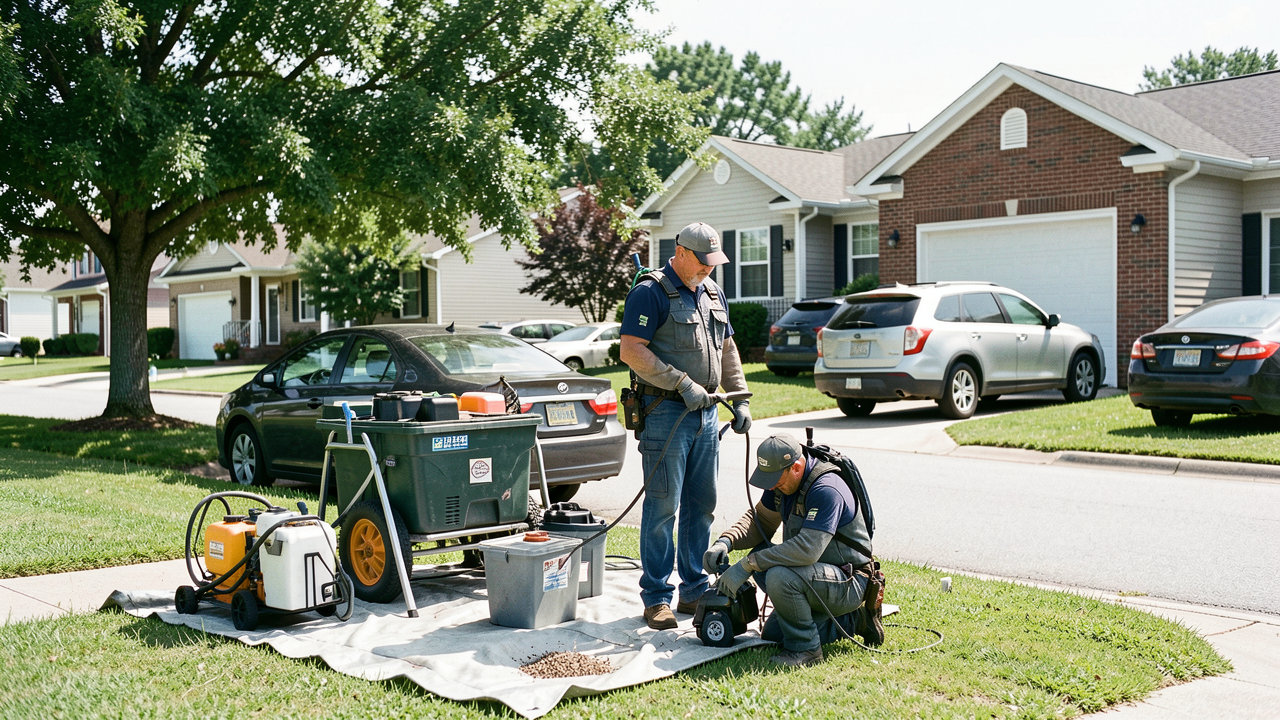
Stations are spaced around the full perimeter of the structure, generally every few feet, set flush with the soil so mowers pass over them and placed with attention to where termites actually forage — near downspouts, A/C condensate lines, tree stumps, old fence posts, woodpiles and consistently damp soil. Hard surfaces don't rule out coverage; stations can be installed through concrete with a core drill and capped. Expect the installer to walk the whole perimeter first, map the station positions, and note conducive conditions: wood-to-soil contact, mulch piled over the slab edge, poor drainage along the back wall. A typical single-family home is a few hours' work. Same-day installation is often possible, and estimates are free, so there's no cost to having someone look before you decide.
Price tracks perimeter length more than square footage, plus the number of stations needed, how much concrete has to be cored, and whether an active infestation needs treating at the same time. Ask three things before you book: how often stations will be inspected and who does it, what happens when a station shows a hit, and what the arrangement covers in writing. Because our humid subtropical climate keeps termites active year-round rather than shutting them down over winter, stations need checking on a real schedule — a system installed and then forgotten is just plastic in the dirt. Bad installs show up as stations spaced too far apart, skipped runs along fence-line walls, housings set proud of the soil and knocked loose, or caps left unsealed so they fill with mud.
We install and service bait systems in Slidell, Lacombe and Alton. Call to arrange a look at your perimeter and to ask about payment options.