Spiders are a symptom as much as a pest. Where they are living in numbers, something else is living there too — the midges, gnats, roaches and swarming insects they eat. That is why spider work in southeast Louisiana rarely ends with one indoor spray, and why the first thing worth doing at your house in Slidell is finding out which spider you have and what is feeding it.
Orb weavers strung across the porch, cellar spiders in the garage corners and wolf spiders wandering in from the yard are nuisance problems. They are dealt with by knocking down webs, treating the perimeter and cutting off the insects drawing them in. Brown recluse and widow spiders are a different job. Recluses live inside — in storage boxes, behind baseboards, in attic insulation, under furniture that has not moved in years — and they are rarely found by walking around with a flashlight. They are found with monitoring boards placed along walls and in closets, left down, and checked. Widows prefer the outside of the house: the underside of deck framing, water meter boxes, inside a garage door track, the back wall of a shed or boat house. If you are not sure what bit you or what you saw, say so on the phone and describe where it was. Location narrows it down faster than a description of the markings.
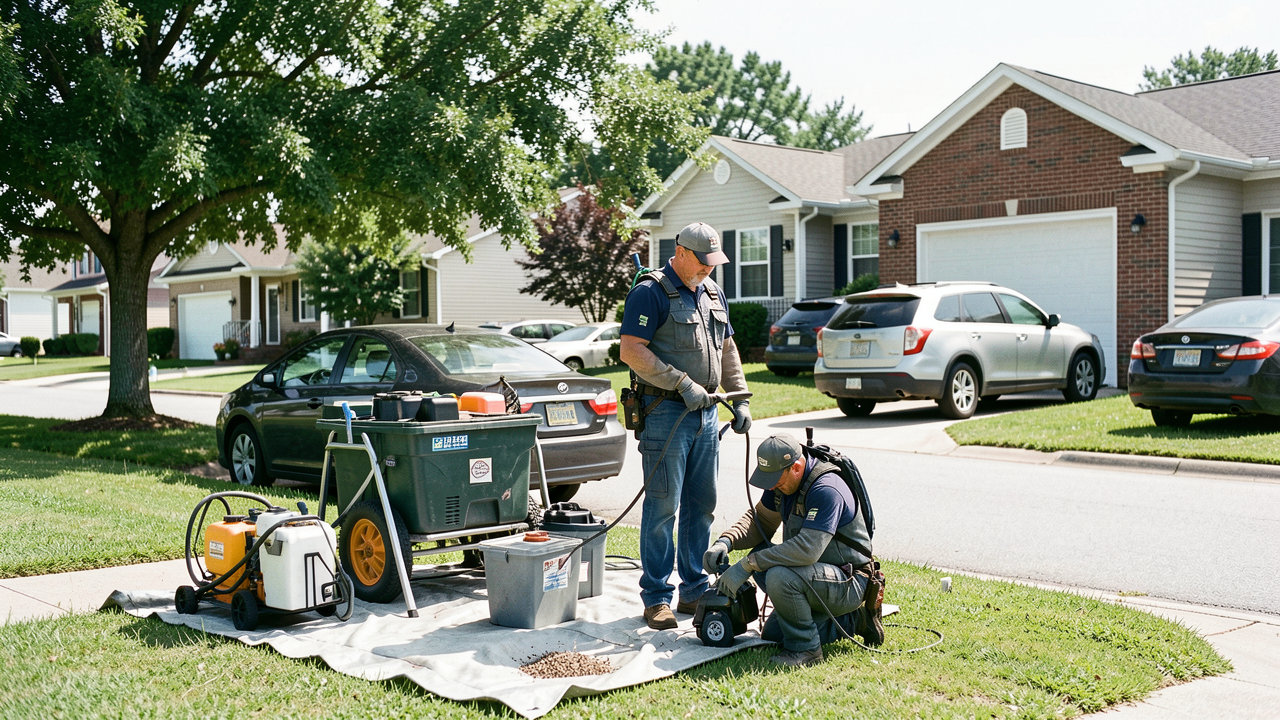
A proper visit starts outside. Eaves and soffits are de-webbed with a pole — this matters, because old webs left in place make the house look untreated a week later and give new spiders a foothold. Then the perimeter, foundation line, window and door frames, vents, weep holes, the underside of elevated decks and piers, and any detached garage, shed or carport get treated. Inside, work is targeted: cracks and crevices, closets, garage shelving, attic access, and under sinks and utility areas where moisture collects. Harborage advice is part of it — firewood stacked against the wall, cardboard storage in the garage, exterior lights that pull insects to the door all day, gaps under a door you can see daylight through.
The climate here supports pest activity through the whole year rather than shutting it down in winter, so the follow-up schedule matters more than the strength of any single application. This is the same humidity that keeps Louisiana's Formosan termite problem running year-round, and those spring swarms become food. A single treatment knocks down what is present. Keeping spiders out is about repeat perimeter coverage and fixing what brings their prey close to the house.
Square footage, number of stories, how much eave and soffit needs reaching with a pole, whether the home is on a slab or elevated with accessible underfloor space, how many outbuildings you want covered, and whether you have a recluse situation that needs monitoring and return visits rather than one application. Ask whether de-webbing is included or extra, what the follow-up interval is, how long you need to stay off treated surfaces with pets and children, and whether the exterior insect pressure feeding the spiders is being treated too. Estimates are free, same-day service is available, and several payment methods are accepted. Call to describe what you are seeing and where — in Slidell, Lacombe or Alton.