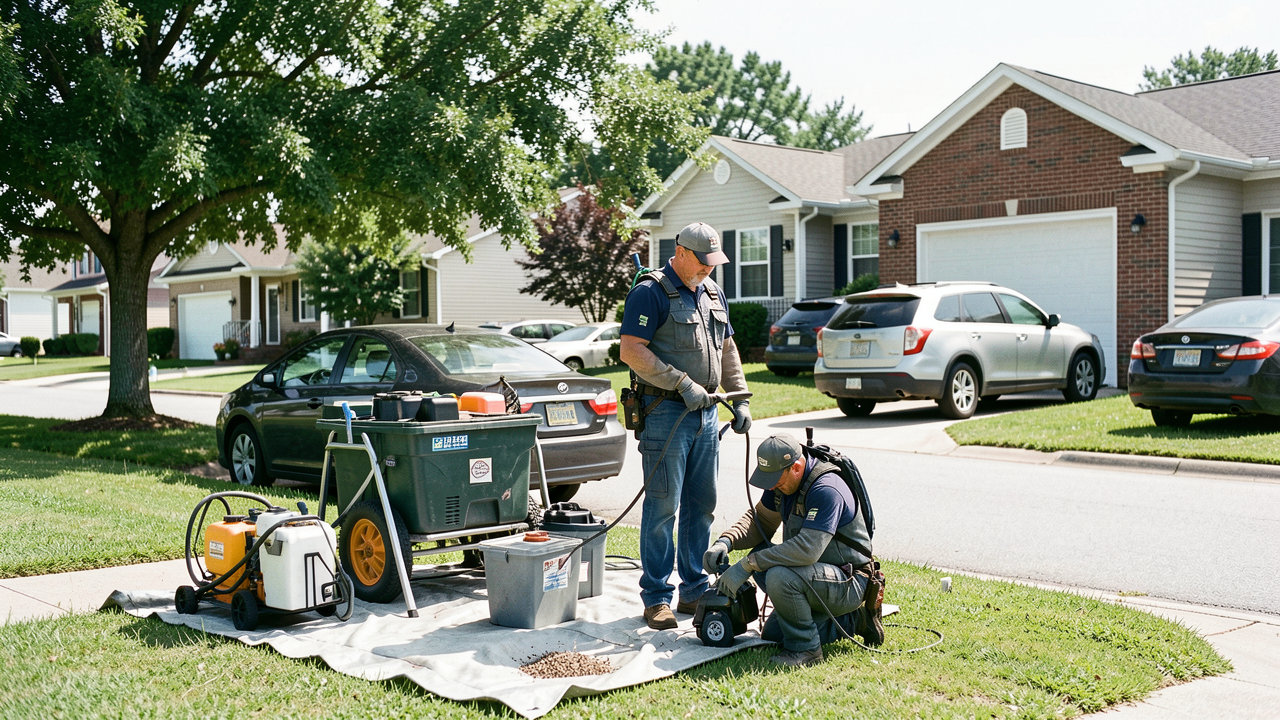
Most people call about pest control after something specific happens — ants streaming across the kitchen counter, roaches in the garage after a wet week, a wasp nest under the eave. The real question is whether you need that one problem dealt with, or whether you need something standing between your house and the next problem. Those are two different pieces of work, priced and performed differently, and it is worth knowing which one you are buying before you commit.
A one-time pest treatment makes sense when you can name the pest, point at where it is, and there is no reason to think the conditions that produced it are permanent. A single wasp or hornet nest, a roach population that followed a delivery of boxes into the house, a swarm of fire ants that mounded up in the yard after heavy rain — these are finite jobs. The work is identification first, because treatment that works on one species does nothing to another. Fire ants are treated at the mound and across the yard with bait that foraging workers carry back to the queen, and the job is largely outdoors. Carpenter ants are a structural problem: they nest in wood that has already been softened by moisture, so the treatment follows the trail back to the nest and the real fix often involves finding the leak, the rotted sill, or the wet fascia that made the wood hospitable in the first place. Treating the visible ants without locating the nest buys you a few quiet weeks and nothing more.
A single treatment also has honest limits. German roaches, bed bugs, and rodents rarely clear in one visit no matter who does the work, because of egg hatch cycles, harborage behavior, and re-entry points. A contractor who tells you otherwise is selling you a second call.
Southeast Louisiana's humid subtropical climate does not give you a winter pause. Termites and other structural pests stay active year-round rather than shutting down for a season, which means the gap between treatments is the thing that matters, not the calendar month you start. That is the whole logic behind recurring pest control plans: a perimeter barrier and interior treatment refreshed on a schedule before it degrades, instead of a strong treatment once a year that has worn thin by month five.
A typical recurring plan starts with a heavier initial service — perimeter spray, crack and crevice work, eave and soffit knockdown, bait placement where it suits the species — and then settles into lighter maintenance visits every quarter or every other month. Frequency should be set by what you actually have. Houses backing onto wooded lots in Lacombe, properties on slab with heavy landscaping against the foundation, and homes with crawl space moisture generally need tighter intervals than a tight, newer house with a clean three-foot gravel perimeter.
Seasonal pest prevention packages work differently. Instead of a flat schedule, the visits are timed to pressure: mosquito and yard treatment running through the warm months, rodent exclusion and interior work weighted toward fall when they start looking for a way in, and perimeter attention after the heavy spring rains push ants and roaches toward the house. If your problems are predictable but not constant, a seasonal package usually costs less than full-year recurring service and covers the same ground.
Cost tracks square footage, linear footage of foundation, the number of structures on the property, how much of the work is interior versus exterior, crawl space access, and the species involved — rodent and bed bug work carries more labor hours than general ant and roach service. Expect an inspection before any firm number; estimates are free, so there is no reason to accept a price quoted sight-unseen over the phone.
Before you book, ask what pests the plan actually covers and which ones are excluded, whether callbacks between scheduled visits are included, whether the agreement auto-renews, and what products are being used where children and pets will be. Ask specifically whether termites are included — Formosan subterranean termites are a severe, well-documented problem in Louisiana, they are harder to control than native species, and they cause serious structural damage. General pest plans usually do not cover them, and termite protection is a separate scope of work with its own inspection.
Same-day service is available for active problems, and several payment methods are accepted. Call to get a look at the property and a number, whether you are in Slidell, Lacombe, or Alton.