They get lumped together because both ride in on pets, but they behave nothing alike and the treatment reflects that. Fleas are an indoor population problem. By the time you see one jumping on your ankle in the hallway, the bulk of the infestation is eggs and larvae down in carpet fibre, the gaps between floorboards, the sofa seams and wherever the dog sleeps. Bites cluster around ankles and lower legs. Ticks, by contrast, are an outdoor ambush problem. They sit on grass tips and brush edges along the shady side of the yard, the fence line, the woodpile, the transition where mown lawn meets palmetto and pine, and they wait. You find them attached rather than jumping, often after a walk through the taller stuff or a trip out toward the water. A yard in Slidell can produce both at once, and the two jobs overlap only partly.
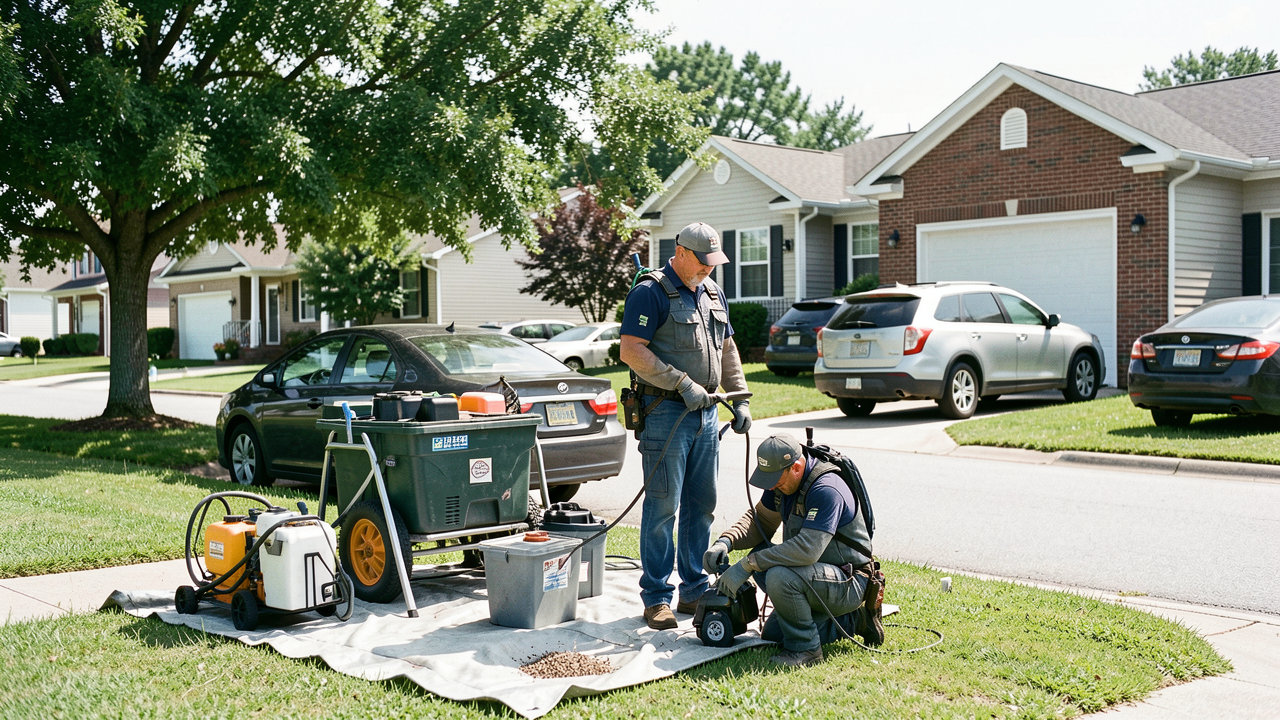
So the work splits. A flea treatment is primarily interior: a residual applied to flooring, baseboards, upholstered furniture and pet resting areas, combined with an insect growth regulator so the eggs and larvae that survive the first pass never reach biting adults. Without that growth regulator you get a knockdown and then a second wave about two weeks later, which is the single most common reason people think a treatment "didn't work." Tick control is driven outside — targeted application to harborage along property edges, under decks and raised floors, around shrubs and ornamental beds, rather than blanket-spraying open lawn where ticks mostly aren't. On raised houses around Lacombe and Alton, the underside matters for both: opossums, raccoons, feral cats and squirrels nesting under a home drop flea eggs by the thousand, and no amount of indoor spraying fixes that until the animal is gone and the space is treated.
Prep is not optional and it does more for the outcome than the product does. Vacuum thoroughly before the visit, including under furniture and cushions, and empty the canister or bag outside the house. Wash pet bedding on hot. Pick up toys, clothing and anything on the floor so the technician can reach the surfaces that matter. Pets need to be on a vet-prescribed flea product, because the animal is a moving reservoir and untreated pets will reseed treated floors within days. Fish tanks get covered and pumps switched off during application. Expect to stay off treated surfaces until they are dry, typically a few hours, and then resume vacuuming daily for a couple of weeks — vibration and warmth trigger the pupae to hatch into the residual, which is exactly what you want.
Plan on a follow-up. Flea pupae are effectively armoured against insecticide inside their cocoons, so a single visit cannot reach the whole population in a heavy infestation. A second treatment around the two-week mark catches what emerged in between. Ask, before you book, whether that return visit is part of the quoted price or billed separately. Ask what is being used indoors and whether it includes a growth regulator. Ask whether the yard and under-floor areas are included or whether the quote covers interior only. And ask about re-entry time if you have infants, elderly family or anyone with respiratory issues in the house.
Cost is driven by treated area more than anything: square footage indoors, the size and complexity of the yard outside, how much carpet and upholstery there is versus hard flooring, and whether crawl space or under-house access is part of the job. Severity matters too — a long-standing infestation in a house with multiple pets needs more product and more visits than fleas picked up last weekend. Wildlife under the structure turns it into a two-part job, because the pest problem will return until the host is removed and the entry closed. Vacant rentals are their own case: with no host, pupae sit dormant for weeks and then hatch en masse on the first person to walk in.
Southeast Louisiana's humidity and mild winters mean fleas and ticks stay active year-round here rather than dying back in a cold season, so treatment timing is dictated by when you notice the problem, not by the calendar. Call Subterranean Barrier Co. for a free estimate on flea and tick treatment; same-day service is available, and payment methods can be sorted out over the phone when you book.